
Wombat Creek Tramways
Posted

Full Member
The year is 1963 somewhere in Victoria, Australia
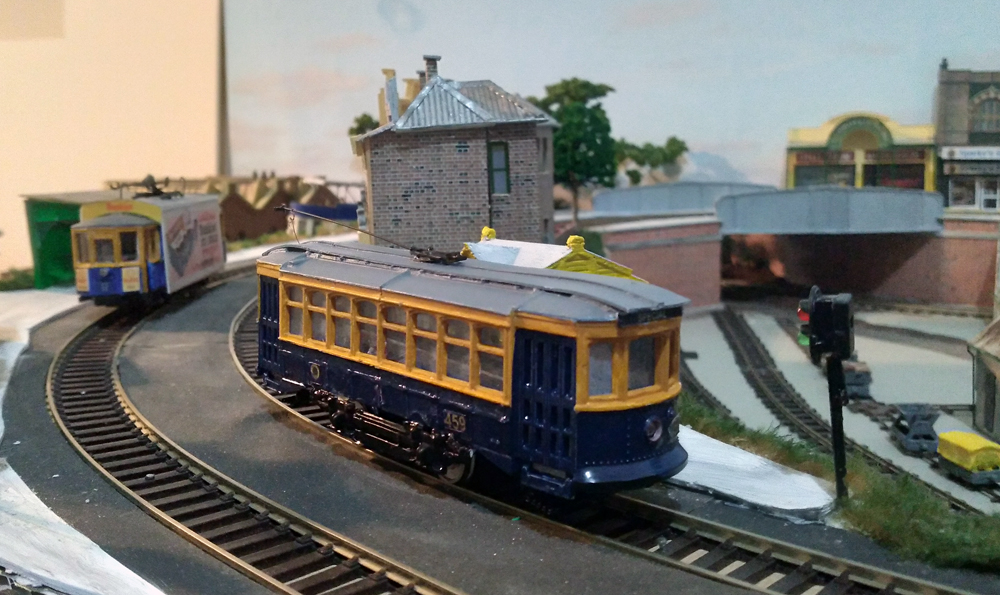
Wombat Creek Tramways X1 no. 459In 1923 two single truck Birney Lightweight Safety Cars were imported (as flat packs!) by the Melbourne & Metropolitan Tramways Board from the United States. The were name the X class nos 217 and 218. These tramcars were designed to meet the challenge of motor omnibuses, by providing a tram which was cheap to construct and could be operated economically on low density passenger routes by single man crews. With its wooden seats the X class cars offered the passengers a very uncomfortable ride, but overall the design wasn't bad. (Six similar tramcars were imported around the same time for use in Geelong and Port Adelaide. Of the total of eight cars, seven still exist! 217 is in the Melbourne Tram Museum, five are in Bendigo and one is at the Australian Electric Traction Museum in St Kilda, South Australia)
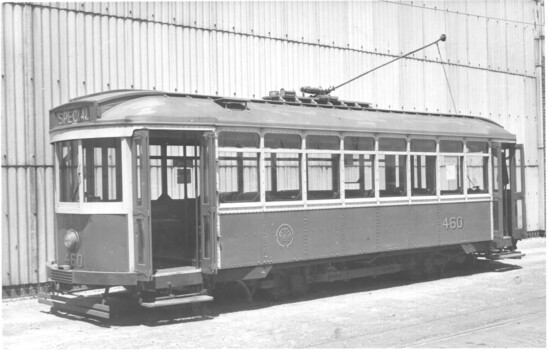 (Image: Victorian Collections)
In 1926-1928 ten X1 class trams were constructed by the Melbourne & Metropolitan Tramways Board. The main differences from the original X class were the rear doors on both sides and upholstered seats. The X1 class cars were mainly used at the isolate Footscray system, but they also ventured into most of the main system as all-night cars. They were all withdrawn in 1962. One is preserved at the Tramway Museum Society of Victoria and one is in Auckland New Zealand. In 2016 the bodies of 461 and 463 were purchased by Walhalla Goldfields Railway with the intention to use them as a rail-car and a trailer. The project was abandoned in 2019 (I think re-gauging from standard gauge to 2 ft 6 in caused some safety issues).
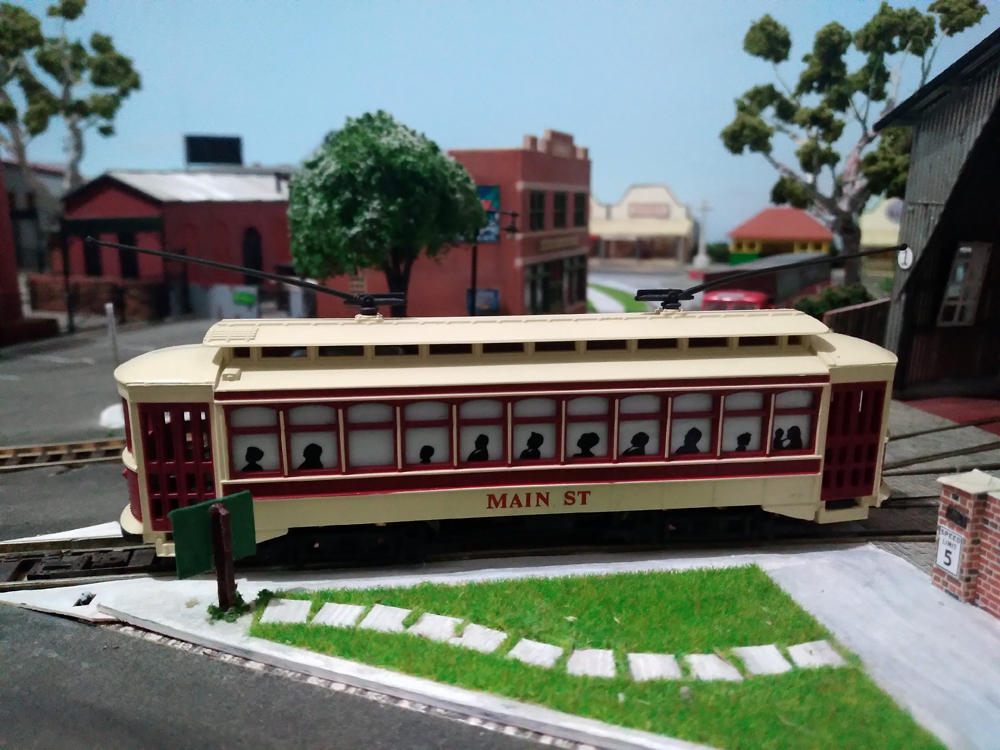
Years ago a few Backmann Brill bogie cars were purchased for Wombat Creek Tramways. The idea was to use the chassis to motorise Cooee's models of W class trams. This project is still ongoing without much success, but it let me with some spare bodies. Compare the X1 and a Backmann car and you will see the similarities. The main differences are the single truck and the number of windows. By cutting out three windows in the middle I got the right number of windows and body length (almost).
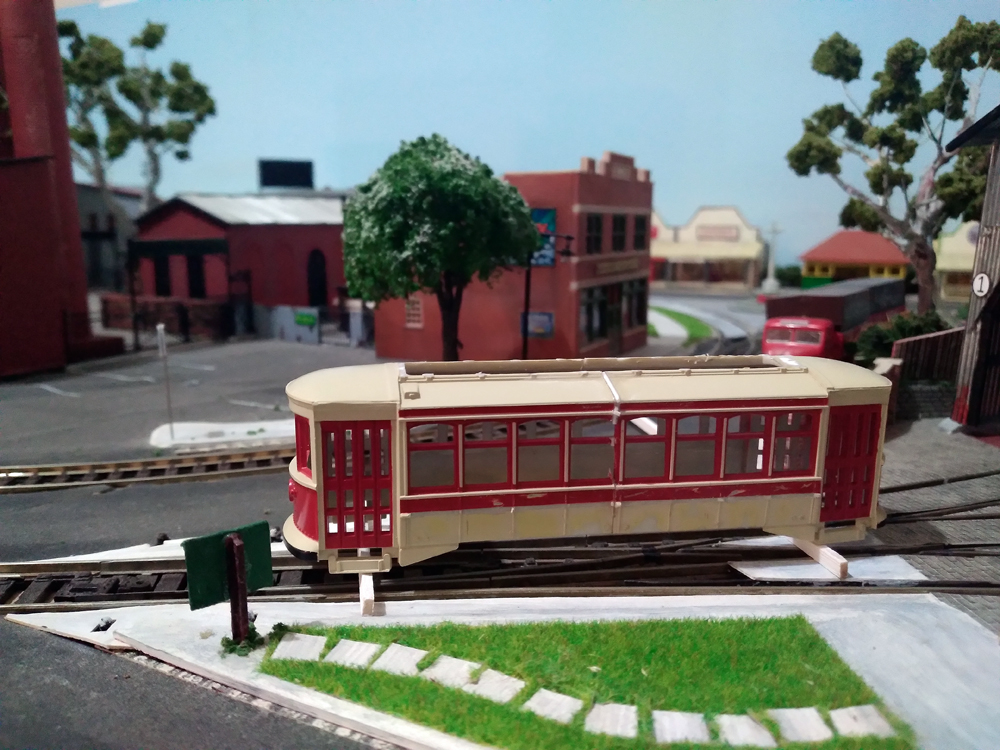
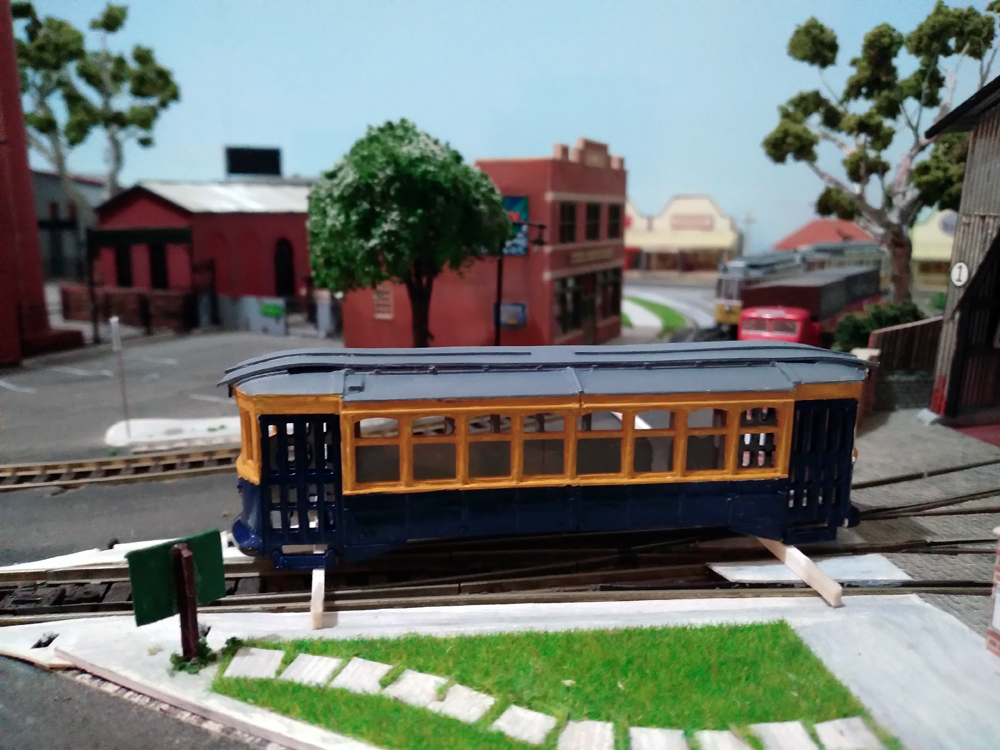
The clerestory roof and twin trolley poles were replaced with a simpler roof and a central trolley pole. A spare Tenshodo chassis went underneath and the two 3mm LEDs made the lights. Painted blue and gold Wombat Creek Tramways X1 no. 459 is ready for service.
Cheers,
Claus
www.wct.payne-ellef.dk
www.flickr.com/photos/ellef/
Claus
www.wct.payne-ellef.dk
www.flickr.com/photos/ellef/


Posted
Site staff


Posted
Full Member
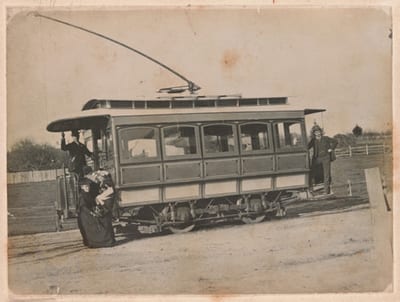 (Image: State Library, Victoria)
The first electric tramway in Australia, and in fact the southern hemisphere, between Box Hill and Doncaster. The tramway opened in 1889 and closed in 1896 due to a lot of practical and financial difficulties. An article from the Melbourne Tram Museum's website tells the sometimes hilarious story of an pioneering tramway. It is well worth a read.
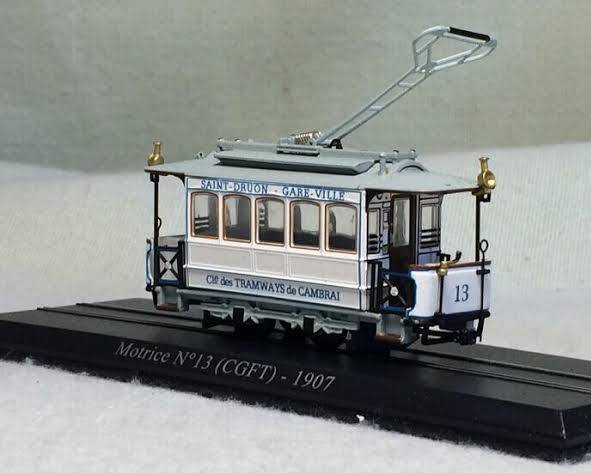
Anyway, the above tramcar no. 2 is similar to an Atlas model of Motrice N°13 (CGFT) from 1907. The dimensions are not quite right, but at least the number of windows match. A model was purchased from a well-known auction site.
This is the reaction from the workers at Wombat Creek tram depot:
head shake.mp4
The model is narrow gauge! Too narrow to be re-gauged. What to do?
Cheers,
Claus
www.wct.payne-ellef.dk
www.flickr.com/photos/ellef/
Claus
www.wct.payne-ellef.dk
www.flickr.com/photos/ellef/
Posted
Site staff


Posted
Full Member
Ed said
Thank you. I should have known. It is after all no. 13. Not that I am superstitious (knock on wood) living in house number 13!
Cheers,
Claus
www.wct.payne-ellef.dk
www.flickr.com/photos/ellef/
Claus
www.wct.payne-ellef.dk
www.flickr.com/photos/ellef/

Full Member
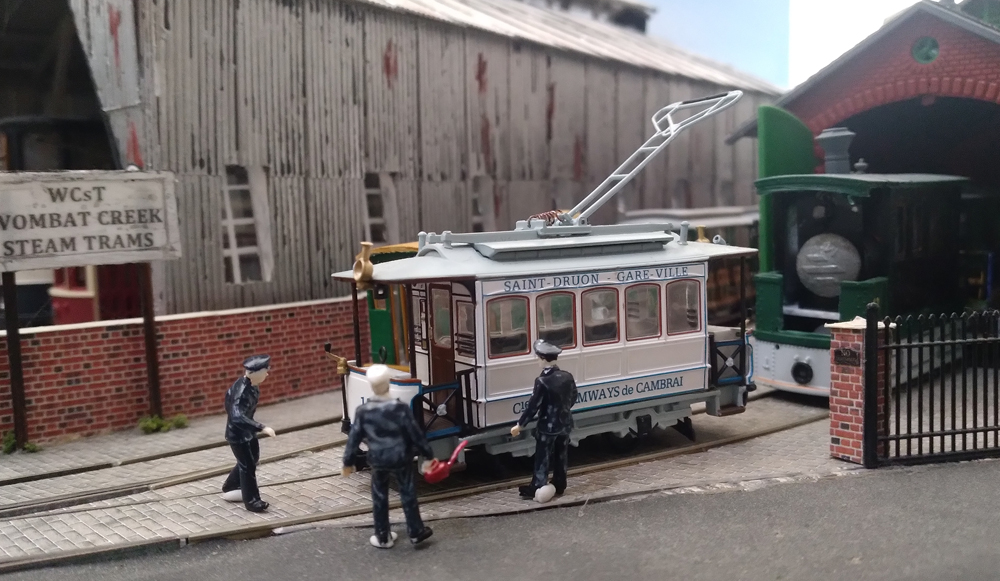
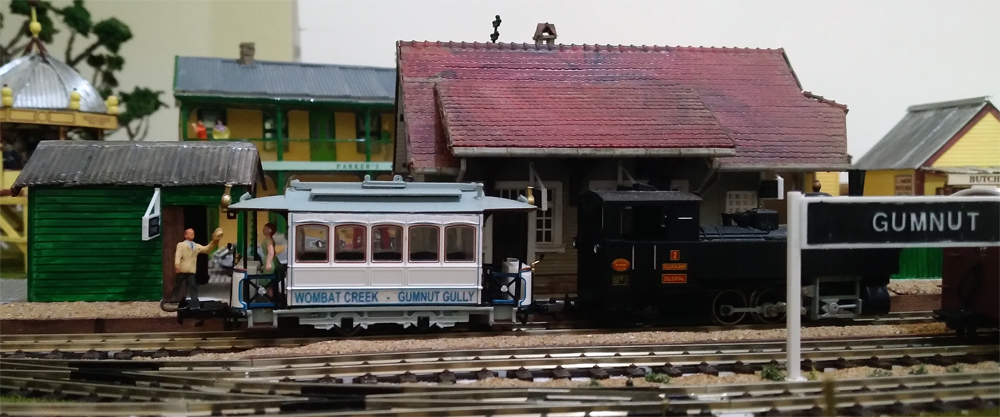
With no use for Wombat Creek Tramways tram no. 13 had to find a new home. The mining railway seemed to be an obvious choice. It is narrow gauge but not electrified. The tram had to be 'degraded' to an un-powered carriage. Until now passengers between Gumnut Gullly and Wombat Creek have be accommodated in the guards van with limited capacity. A 'new' passenger carriage would appreciated.
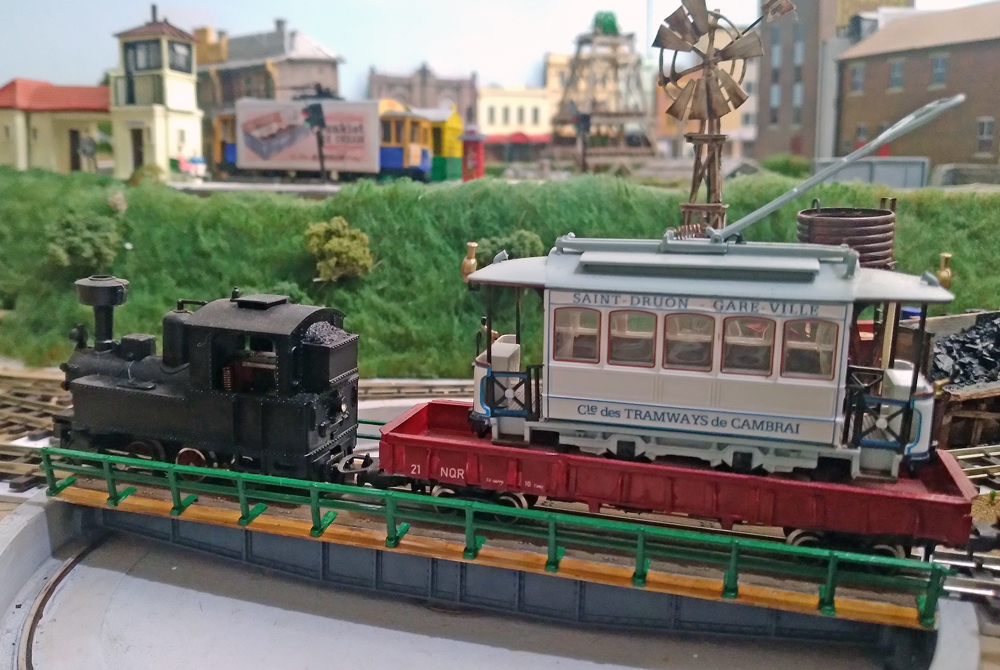
The tram was loaded onto a NQR wagon and transported to the railway's workshop in Wombat Creek. How the tram got on and off the wagon is unknown!
The modifications included dismantling the bow collector, replacing the flimsy plastic wheels with proper metal ones from an 50+ year old Roco bolster wagon (I had to go through a few before success was obtained. The plastic has gone quite brittle), installing new couplings (also 50+ years from Roco) and finally painting and lettering. Despite the short wheel base it is a good runner. It is prototypical? Not at all, but the story behind it is pretty good!
Cheers,
Claus
www.wct.payne-ellef.dk
www.flickr.com/photos/ellef/
Claus
www.wct.payne-ellef.dk
www.flickr.com/photos/ellef/
Posted
Full Member
John.

1 guest and 0 members have just viewed this.