
Wombat Creek Consolidated Mines Pty Ltd
Posted

Full Member
A narrow gauge railway between the mines, the sawmill and the explosives factory
Excellent corrugated iron Claus - what is it ? Also, the posts/columns on the front (not sure what they're actually called) are very interesting - are they turned wood or what ?
'Petermac


Posted

Full Member
Petermac said
Excellent corrugated iron Claus - what is it ? Also, the posts/columns on the front (not sure what they're actually called) are very interesting - are they turned wood or what ?
From “Post #293,573”, 10th June 2026, 7:21 am
The corrugated iron is '97402 Corrugated Siding' from JTT Scenery Products. The plastic sheets are very easy to work with and can be curved in both directions. The posts are (almost) square strips cut from 2.5 mm (lower posts) and 1.5 mm (upper posts) sheets of balsa wood.
Cheers,
Claus
www.wct.payne-ellef.dk
www.flickr.com/photos/ellef/
Claus
www.wct.payne-ellef.dk
www.flickr.com/photos/ellef/
Posted

Full Member
Curious - how cold is a cold Aussie winter?
- Darius
Posted
Full Member
Hi Darius,D_Will said
It all looks very nice! Your projects are fun to follow, claus.
Curious - how cold is a cold Aussie winter?
From “Post #293,578”, 13th June 2026, 8:52 am
It is a little difficult to give you an exact answer. In Darwin the daytime temperatures will be in the mid 30s. Here on Phillip Island (south of Melbourne) and probably in Wombat Creek the daytime temperature will be mid 10s. Lower during the night, of course, but we don't get frost. If you drive a couple of hours out of Melbourne, you can go skiing in the Australian Alps. So, nowhere near a Canadian winter.
Cheers,
Claus
www.wct.payne-ellef.dk
www.flickr.com/photos/ellef/
Claus
www.wct.payne-ellef.dk
www.flickr.com/photos/ellef/
Posted
Full Member
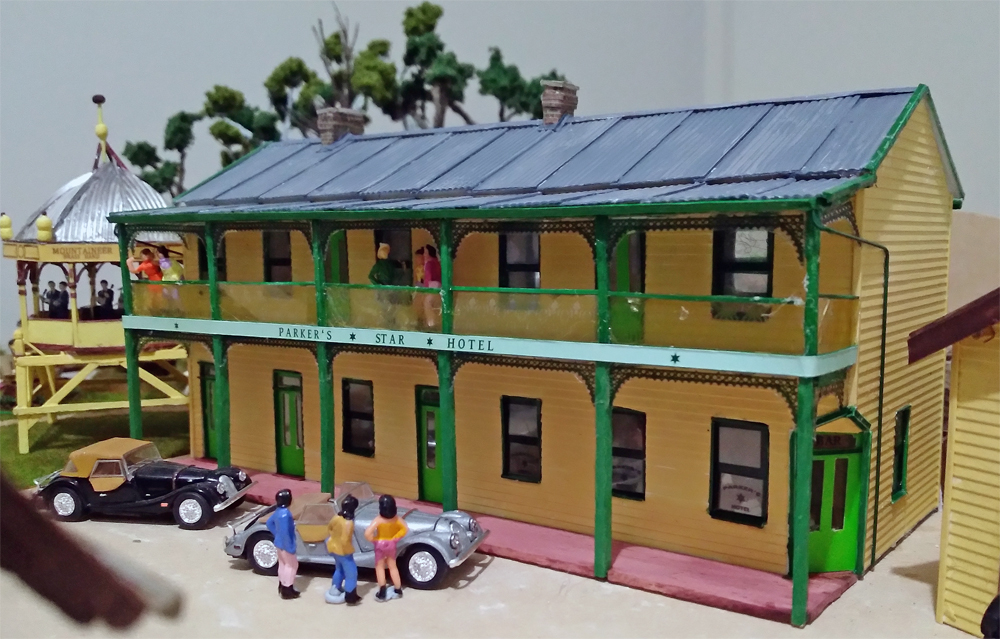
The original Star Hotel was first built as a single storey building in the late 1860s and overtime it was expanded with a second story added. In 1892, Mr William Parker, proprietor and licensee "Completed the thorough renovation of his commodious premises which compare favourably with any country hotel in the colony." [Walhalla Chronicle, 8 March, 1892]. With the change of proprietors the hotel also changed name. For example from Parker's Star Hotel to Conlan's Star Hotel.
The Star Hotel survived the licensing reviews of the early 20th century and was the sole hotel to continue in Walhalla after the closure of the gold mines in 1914. It traded through the 1920s and 1930s and by the second world war was in a very poor state.
Unfortunately, in late December 1951, a faulty hot water service started a fire and the building burnt to the ground. The site was taken over by the Shire of Narracan who built a toilet block on the land and turned the area into an informal carpark.
In early 1997 a development proposal was put forward and a planning permit application made for a new Star Hotel. Walhalla's Star Hotel was built as an accommodation hotel with twelve large ensuite bedrooms, a guest lounge as well as a restaurant (named after Parker) and bar for the guests of the hotel. The official opening of the hotel occurred on 11 March, 1999.
If you compare photos of Gumnut Gully's Star Hotel and present days Walhalla Star Hotel you will notice the different configuration of doors and windows. The Gumnut Gully version is based on photos from 1892. Over the years, before the hotel was razed by fire, the front had some changes to the windows, but not as 'radical' as the rebuilt version. It has been impossible to find photos of the back of the hotel. There fore what part is not accurate. Likewise, the original colour scheme is unknown. Instead, I have used the modern hotel as a template.
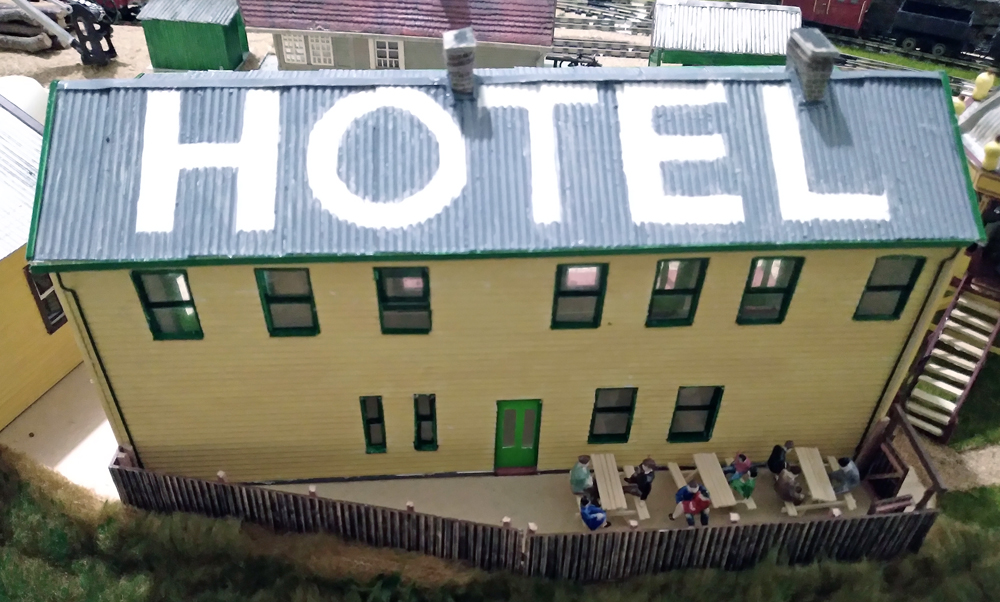
The guest in the beer garden are sitting at tables and benches made of thin slivers of bamboo. Unfortunately, no beers are to be seen and the door to the bar is slammed shut. Until beers are served the song with Slim Dusty is quite appropriate.
Cheers,
Claus
www.wct.payne-ellef.dk
www.flickr.com/photos/ellef/
Claus
www.wct.payne-ellef.dk
www.flickr.com/photos/ellef/
Posted
Full Member
Cheers Pete.


Full Member
In December 2021 a teaspoon landed in Wombat Creek.
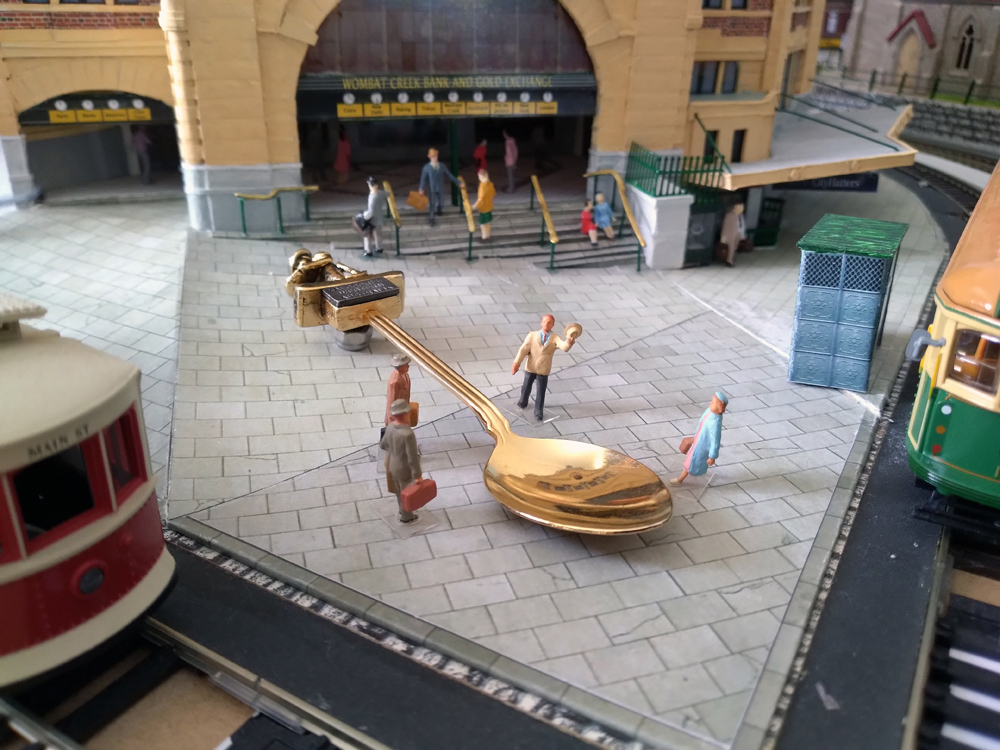
The idea was to cut off the top for a statue in a prominent location. Years went by and nothing happened. Finally in June 2026 some action is taken. Not in Wombat Creek but in Gumnut Gully.
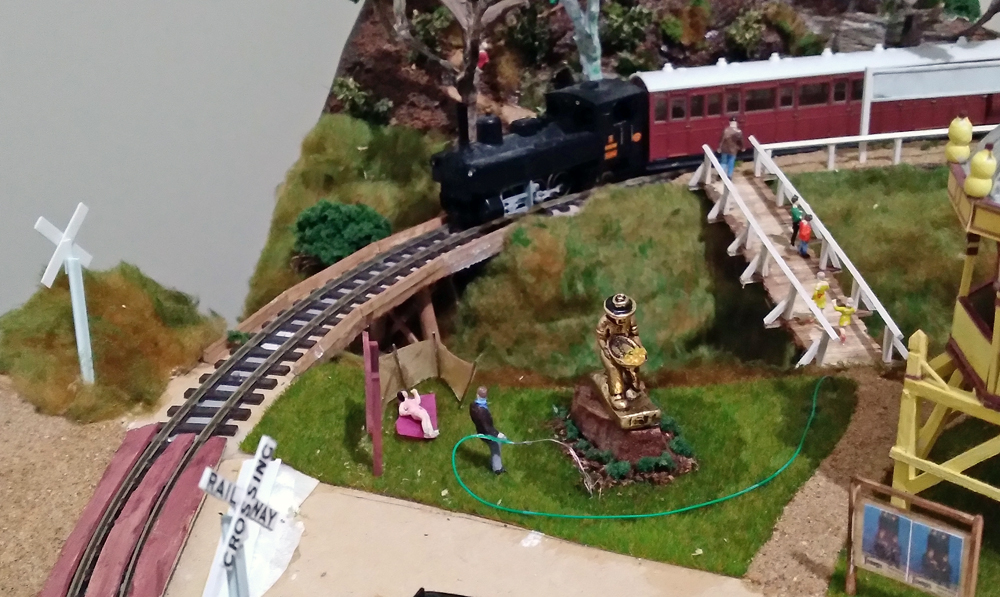
The statue of a gold prospector is mounted on a rock (piece of eucalyptus bark) and placed in a little grassy area next to Stony Creek. To properly embed the rock into the ground, some dirt (tea leaves) and shrubs are put round it and secured with diluted PVA. Unfortunately the glue seeps into the grass and a 'wet' area appears. What to do? Well, rig up a hose (thin wire) and a man is set to water the plants. But why is he watering all over the place? Because his attention is to the girl sunbathing. (I had to 'decapitate' the figure and turn the head 90 degrees)
 Last edit: by Claus Ellef
Cheers,
Claus
www.wct.payne-ellef.dk
www.flickr.com/photos/ellef/
Claus
www.wct.payne-ellef.dk
www.flickr.com/photos/ellef/
Posted
Full Member

'Petermac
Full Member
The band stand is ready for its first performance. The people of Gumnut Gully are aiming high. They have been in contact with Brian Epstein, the manager of an upcoming band called the Beatles. Unfortunately the Beatles are fully booked with concerts in England and Europe. They will not be able to do a tour of Australia before next year (1964). Instead the Termites will perform the opening concert.
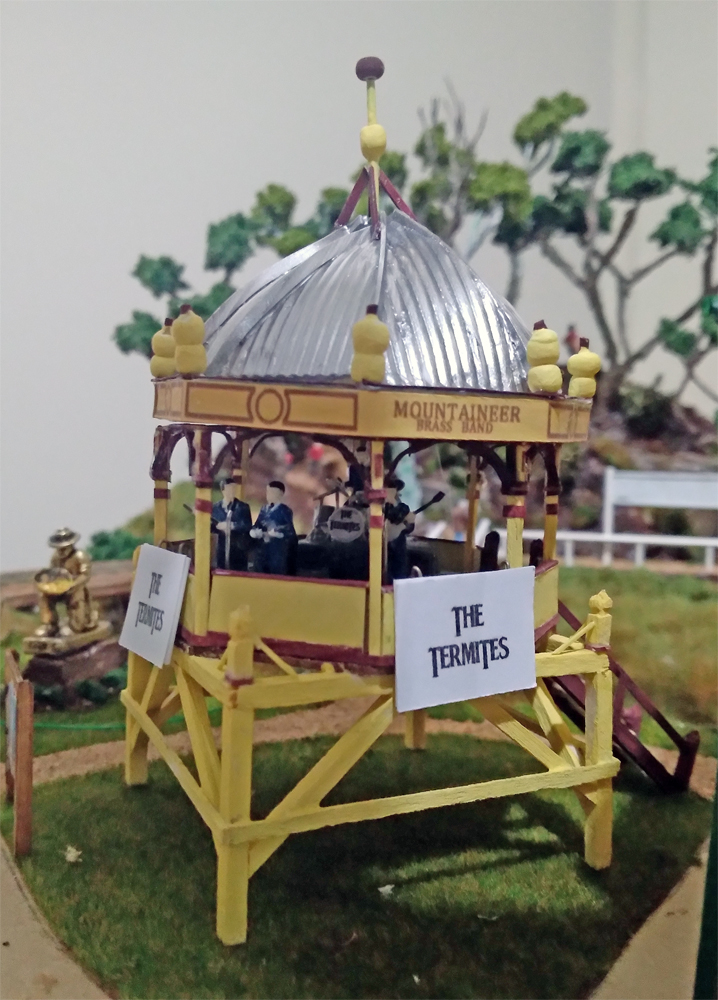
They rose to local stardom in Wombat Creek after an open air concert on the top of the Brewery.
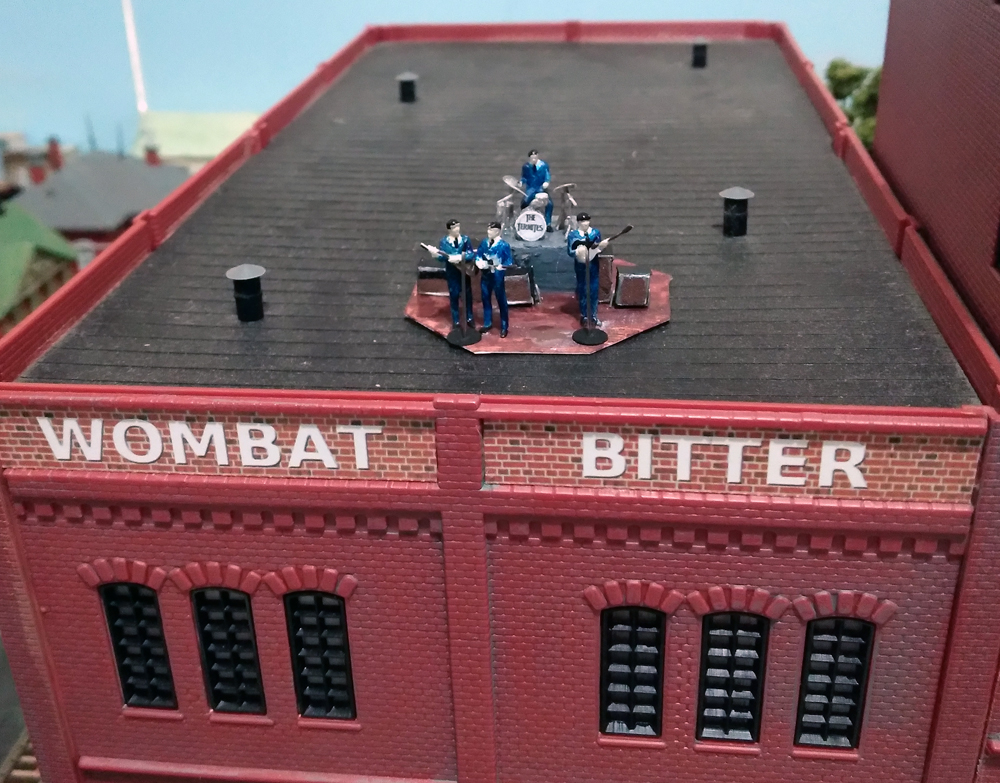
Cheers,
Claus
www.wct.payne-ellef.dk
www.flickr.com/photos/ellef/
Claus
www.wct.payne-ellef.dk
www.flickr.com/photos/ellef/
Full Member
The narrow gauge railway serving the mines and factories doesn't run scheduled goods trains. Instead the trains run on demand. If the Big Nugget Mine is out of explosives or firewood a train will deliver the goods from the Explosives Factory and the sawmill. Likewise, ore wagons will depart Gumnut Gully for the stamper the Big Nugget mine. But how do I know, if there is a demand? After all, it is a model railway and I will not receive a phone call from the managers! Well, a solution is using a laptop to create 'on demand'.
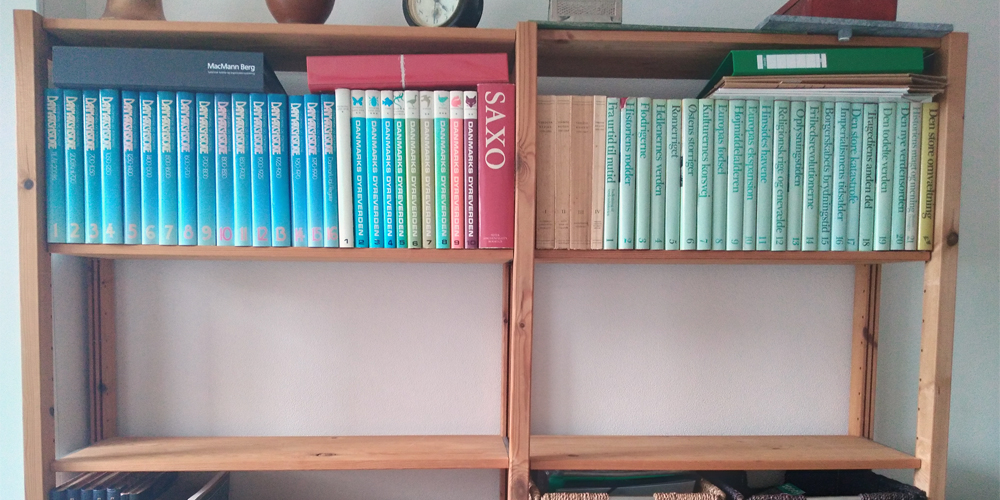
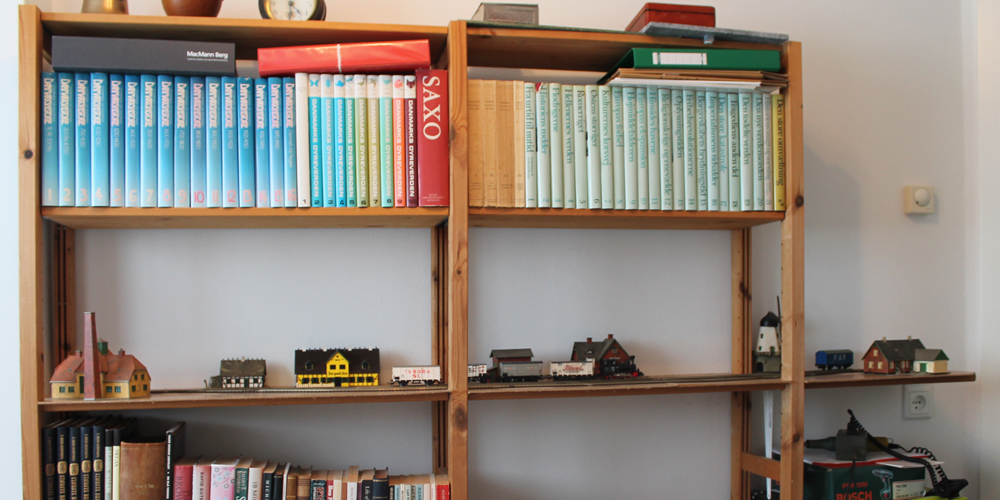
To explain how this will work I need to do a 'side-step'. Before moving to Australia I have dappled in model railways in Denmark. Before the move, all the rolling stock were put into storage and the lay-out itself given away to a model railway club. With no need for the current layout, the wagons and locomotives sat idle in a cupboard. Idle were also a couple of shelves in the bedroom and an idea emerged. Couldn't the shelves and some of the wagons be turned into a shunting puzzle?
A track plan from a station (Kappendrup) on the former railway between Odense and Bogense was drawn on 'Anyrail' and the necessary points and tracks were bought and placed on the shelves. The next task was to work out a spreadsheet on the laptop.

W: wagon L: Locomotive G:Guards van
The 'W' shows the possible position of various wagons. They are all more or less equal in lengths. A total of 12 wagons can be accommodated at the station. The 'L/G' indicates the final position of the locomotive and the guards van. One at either end of the departing train.
The spreadsheet look likes this (it is in Danish, but I think you will get the idea):
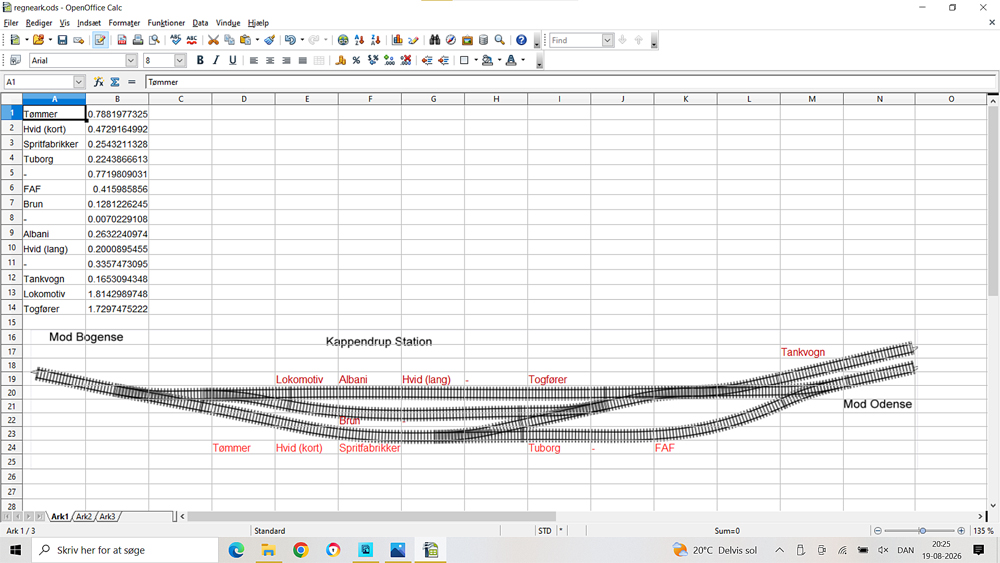
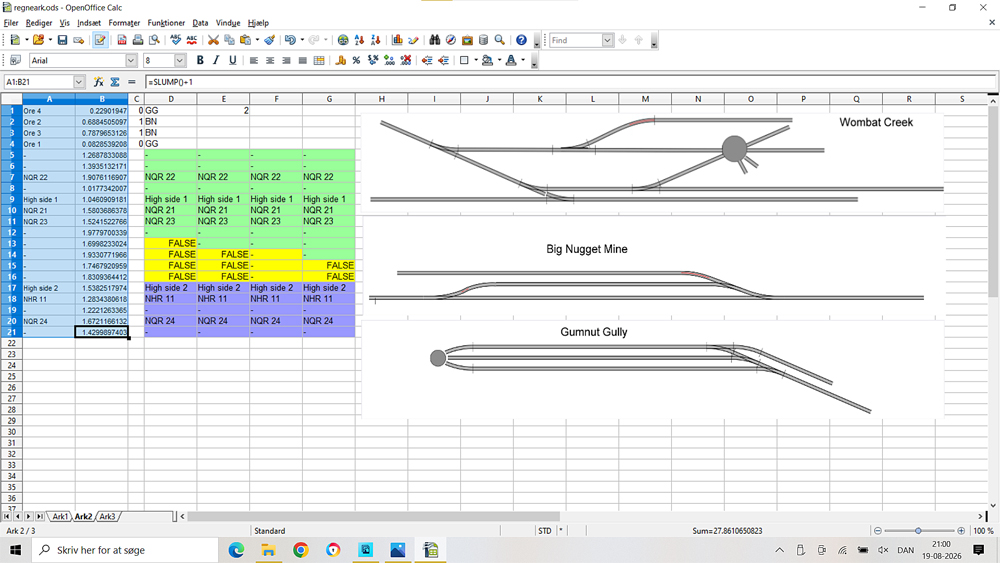
Column A: Description of the various wagons. '-' indicates no wagon. 'Togfører' = guards van
Column B: Each wagon (including '-') is allocated a random number between 0 and 1. The locomotive and guards van a number between 1 and 2.
The data is sorted is sorted after column B and I get a random list of wagons. The first three wagons are placed in track no. 3a. The next three (including one '-') in track no. 3b. Two wagons in track no. 2. Three wagons in track no. 1. The last wagon is in the private siding. Finally the locomotive and the guards van are placed around the wagons in track no. 1 and the train is ready to depart towards Bogense. To make the shuttle a bit difficult, the short tracks and the end of the station are only long enough for a locomotive and one wagon. A puzzle will take between 10 and 15 minutes to solve. With 159,667,200 possible combinations I have enough to solve during the rest of my lifetime.
Back to the narrow gauge railway. I have tried to use the same concept. Let the laptop decide, if the sawmill needs more logs loaded up in Gumnut Gully. Well, that is the easy part. It gets complicated with the ore wagons. In Gumnut Gully they go into the siding along the Long Tunnel Mine. At the Big Nugget Mine they share a siding with ordinary (and longer) wagons. As a consequence the number of ore wagons at the Big Nugget Mine determines the number of other wagons at the same mine.
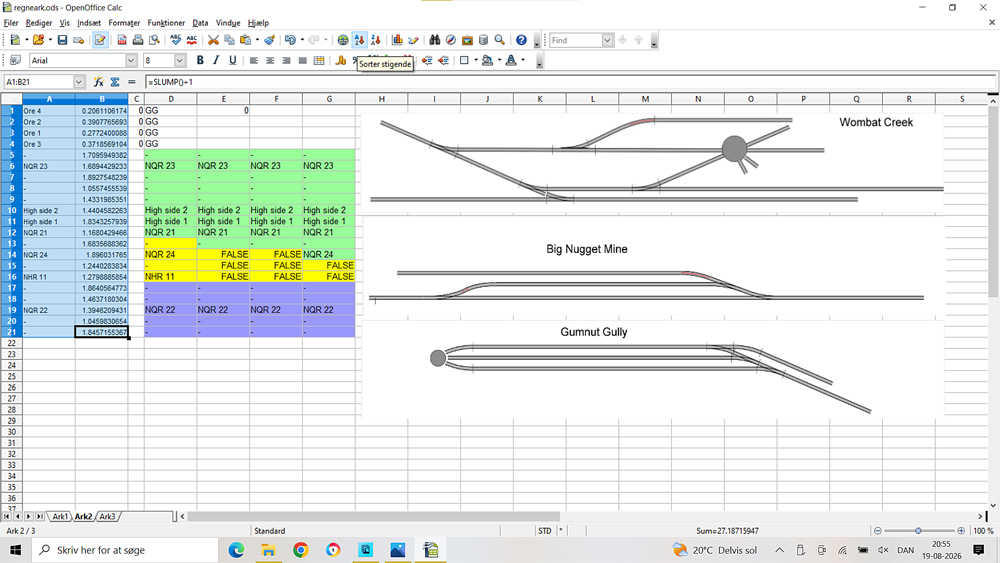
Column A: The various wagons ('-' indicates no wagon).
Column B: A random number between 0 and 1 (the ore wagons) or between 1 and 2 (the longer wagons).
Column C: Sorting ore wagons between Gumnut Gully, '0' (value of 'B' less than 0.5) or Big Nugget Mine '1'
Column D: GG = Gumnut Gully BG = Big Nugget Mine
E1: Sum of C1;C4
In this case E1 = 0 (all ore wagons are in Gumnut Gully). The distribution of wagons follows the coloured boxes in column D. Green is Wombat Creek; yellow is Big Nugget Mine; purple is Gumnut Gully (excluding four ore wagons). I still have to refine the spreadsheet. At the moment the actual position of the wagons at the station is not included.
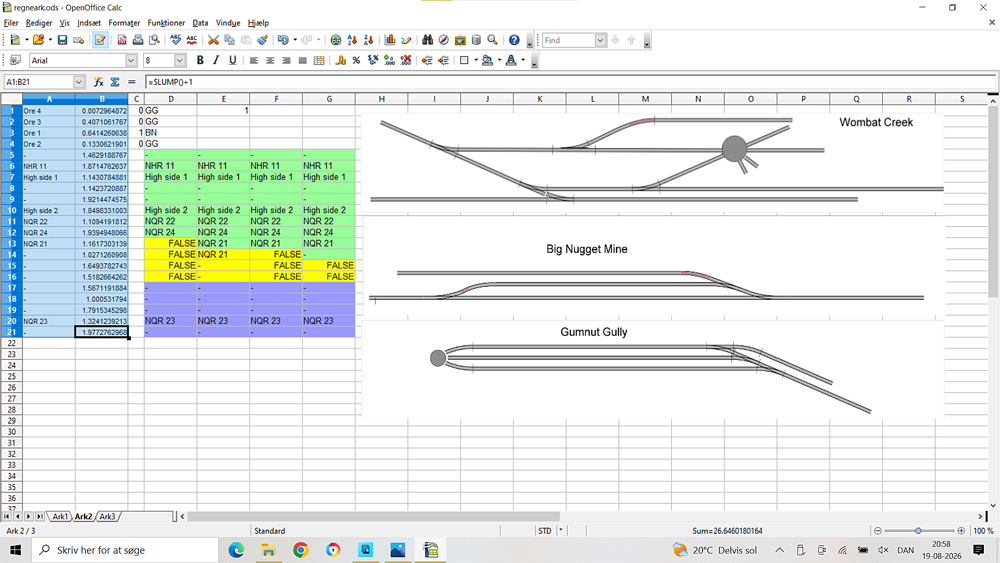
In this example one ore wagon (no. 1) is going to the Big Nugget Mine. E1 equals 1 and the Big Nugget Mine will only have room for three longer wagons (yellow column E).
Two ore wagons (no. 2 and 3) are placed in the Big Nugget Mine. Since the ore wagons are quite short the siding has still room for three longer wagons (yellow column F)
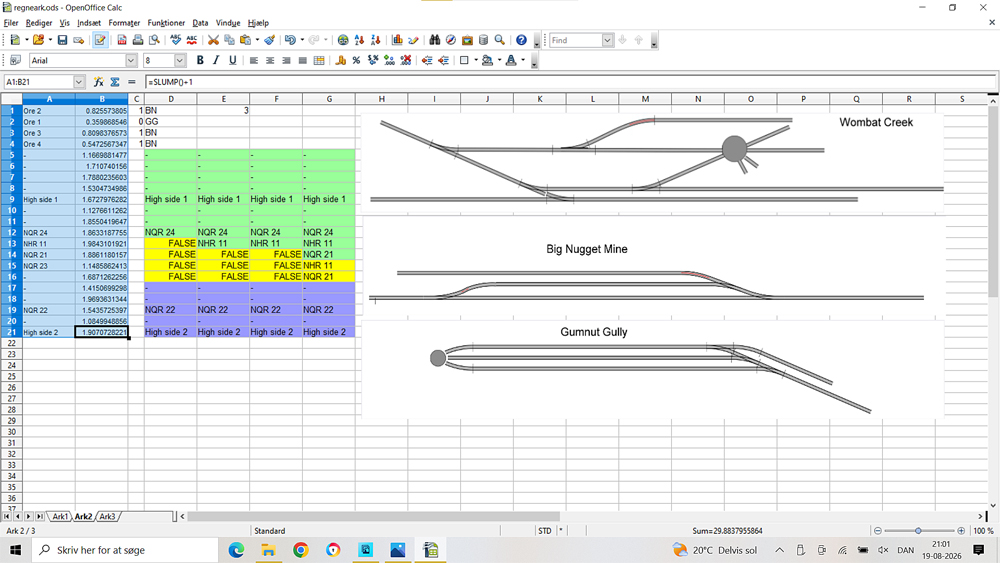
With three (or four) ore wagons at the Big Nugget Mine the spreads looks like this. Only two long wagons can be allocated to the Big Nugget Mine (yellow column G).
I hope all of this make a sort of sense. I hope you have got an idea of how to use a spreadsheet for 'trains on demand'. I am sure the concept will work for larger layouts, too. Could the spreadsheet be organised differently? Probably. If you want further information, have any questions or propose improvements, leave a comment or send me a message.
Cheers,
Claus
www.wct.payne-ellef.dk
www.flickr.com/photos/ellef/
Claus
www.wct.payne-ellef.dk
www.flickr.com/photos/ellef/
Posted
Full Member
Your danish layout reminds me a little of a timesaver.
One thing that bothers me on my inglenook is that it never makes sense to have the brake van shunted around with the goods wagons. It’s fun to have that as part of the puzzle too
- Darius
Full Member
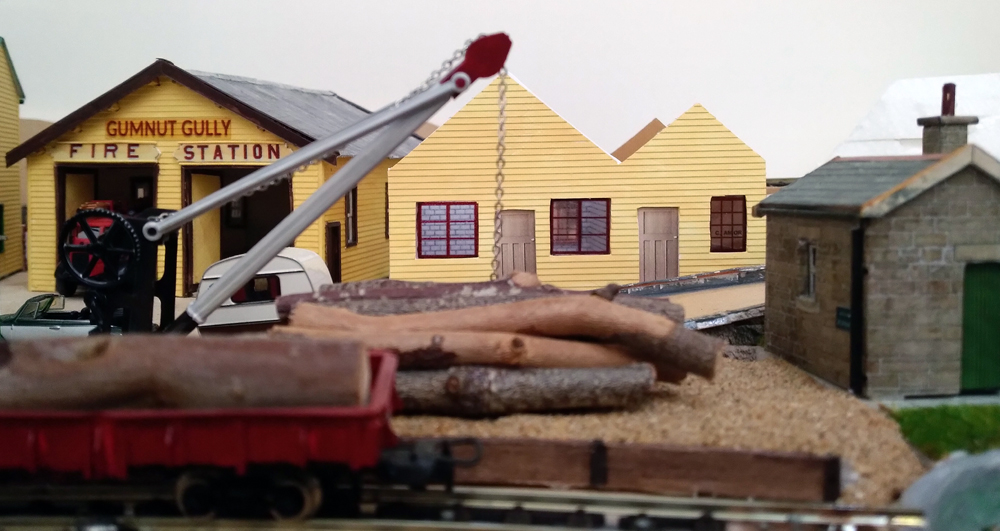
Spring has arrived and construction has commenced in Gumnut Gully. A building for a butcher and a share broker (yes, an unusual combination) is under its way. From the outside it is a rather modest building but the interior will be rather interesting. A closer look at the photo will reveal the walls in the butcher's shop are fully tiled.
Cheers,
Claus
www.wct.payne-ellef.dk
www.flickr.com/photos/ellef/
Claus
www.wct.payne-ellef.dk
www.flickr.com/photos/ellef/
Full Member
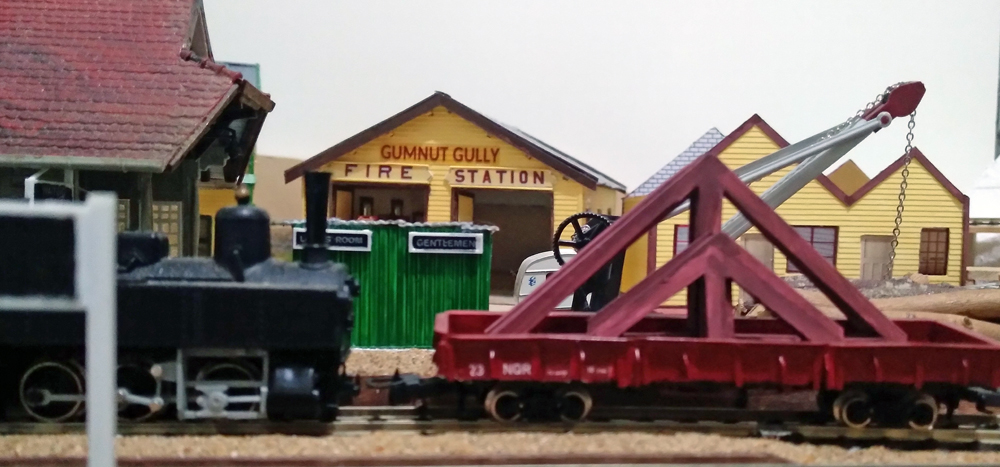
An important delivery has arrived at Gumnut Gully station. A NQR wagon with trusses for the butcher/share broker shop has been placed next to the crane ready to be offloaded.
Cheers,
Claus
www.wct.payne-ellef.dk
www.flickr.com/photos/ellef/
Claus
www.wct.payne-ellef.dk
www.flickr.com/photos/ellef/
Posted
Full Member
Cheers Pete.
1 guest and 0 members have just viewed this.