
Granby Junction 1948 N. Wales
Posted

Full Member
GWR/LMS OO Gauge DCC RR&Co
This is another tale of dogged determination overcoming (after a fashion) all manner of disasters brought about by, I freely admit, overweening self confidence
I had originally intended to have a single entry from the main board into the goods yard.Emboldened by the ease with which I had retro fitted surface mounted point motors I decided to install a new point on the existing board giving me a handy loco loop.


The observant reader will have spotted that not only is there a new form of traffic control in the High Street but also that the point motor shown above is not your conventional above ground side mounted Peco Motor
For those less observant here is a close up.

Unlike the insulfrog Double Slips the new point like most other points on the layout was electrofrog. I planned to switch polarity by using the other side of the motor lever to throw a micro switch ( I am sure Ron (Sol) does this on Charde).
The connections to the frog were cut….. all the wiring soldered and appropriate holes drilled in the baseboard and, here is hubris to a high degree, the point glued to the baseboard
And now Murphy's law stepped in at full throttle;
I discovered that:
The point spring was much stronger than those on the double slips……actually much stronger than average.
Despite spending forever adjusting the position of the side motor it had extreme difficulty throwing the point
It became obvious that it would not be able to throw the point and depress the micro switch.
(In the midst of all this I managed to dislodge the point spring…..a downside to the new points is it is almost impossible to adjust the tension…..fortunately the side mounting holds the blade in place rather like a Tortoise)
I removed the side motor and installed the more powerful of the two peco conventional motors on a side mounting. I then, against my better judgement, put a Peco switch on top to change the polarity. I wasnt sure about this so I secured it with plasticene while I tested everything……then a dab of super glue for a permanent fix and we can move on …………….
Well not quite…….a teeny dab of super glue permanently fixed the point bar……………..take everything apart…..start again….test again…..super glue again….but this time super glue very very carefully
Tested electrically with a loco and it stalled…..polarity was fine, conductivity was fine……I was by now so punch drunk that it took all morning to realise that the connection to the stock rail (the one bit I didnt test) had broken
Finally all was well…….all I had to do was conceal the point and power lines which stupidly I had left in their original positions…….I should of course have re drilled nearer to the new motor………am I the only guy who gets into this sort of time wasting nonsense?
I knocked together a GWR corrugated hut from bits and pieces from the Wills box

I had to buld up the bank a bit and create some shrubs to hide the nick in the side wall that was cut to accommodate the left hand wires……you can just see it in the next shot

Not sure if the point lever will always be there, when I get on to the signalling I suspect that point will have to be controlled from the box.

I knocked up a lean to to conceal the notch for the right hand wiring. The weathering looks a bit heavy but this hut is about 3' from the nearest viewing point……so its a bit like theatrical grease point, it has to be overdone a bit to be effective.
So now on to the back scene……this is the very start of the project to fill in this corner so, after all the fret listed above it was very satisfying to add this little bit.

The loading platform is spare from Metcalfes Platform kit……the Warehouse is a combination of a very ancient Bilteezi Goods Shed and Warehouse Kit. The shops at the back are from Townscene and are probably the best link with the High Street in the Window Sill.
The platform needs weathering and I need to make a sign for the Warehouse……I was thinking of some sort of Co-op warehouse……..does anyone know when the White on Pale Blue colour scheme started?
Well there you have it……alls well that ends well…….but I could certainly have done this more efficiently!


Posted

Inactive Member
I'm glad that you got there in the end. :thumbs
Max
Port Elderley
Port Elderley
Posted

Full Member
I don't think the weathering on the shed is too heavy at all - in fact, I think it looks spot on. Maybe a bit "under-maintained" for GWR but nevertheless, spot on with the rusting around the sheet edges. The blending with weeds etc. is also very well done.
Do I take it the rather smart Georgian/Regency building with the colonade frontage is from Townscenes ? It looks very impressive.
'Petermac
Posted

Full Member
Doug
'You may share the labours of the great, but you will not share the spoil…' Aesop's Fables
"Beer is proof that God loves us and wants us to be happy" - Benjamin Franklin
In the land of the slap-dash and implausible, mediocrity is king
"Beer is proof that God loves us and wants us to be happy" - Benjamin Franklin
In the land of the slap-dash and implausible, mediocrity is king
Posted

Site staff

That bloke Murphy ( or his Chinese cousin) has a lot to answer for but glad to see you overcame all those slight hiccups John.
Ron
NCE DCC ; 00 scale UK outline.
NCE DCC ; 00 scale UK outline.
Posted
Inactive Member
Ken
'It don't mean a thing if it ain't got that Swing'
Posted

Full Member

Wayne
Posted

Full Member
by the way. I havent done much on mine, I hurt my back and just been watching TV or working on the computer. I feel better now and hopefully I can get to work on my layout. Since all the track is down on mine all I have to do is tidy up the wiring, build a new control panel, and instal more signals. I notice you have been cursed by Peco point motors as well, I have only 4 of them left on the layout, I replaced most with Tortoise point motors.
William
Posted
Full Member
[user=6]Petermac[/user] wrote:
Its actually a very heavily weathered Superquick kit………………and the genesisi of this whole modelling thing! My youngest daughter bought the kit for me 20 years ago as a Christmas Present top up………that iswhat got me hookedDo I take it the rather smart Georgian/Regency building with the colonade frontage is from Townscenes ? It looks very impressive.
[user=312]dooferdog[/user] wrote:
Indeed!…….it is, I am afraid, entirely possible that some of these problems resulted from an earlier dose of SLW!I take it a dose of Scottish Laughing Water was taken afterwards?
Doug
[user=22]Wayne Williams[/user] wrote:
I dont actually play golf Wayne but it is a valid analogy. I am reminded of all those horrific crossings/races (the "never again" variety) where it is curiously therapeutic to recount all the disasters when eventually safely back on land and in the bar (with a large SLW)I think it turned out just fine John. After all isn't it a lot like golf? If it looks good on the score card no one can tell what it took to get there!
Wayne
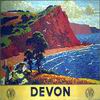
Which reminds me there was a thread over Christmas about big seas that Peter couldnt see in France. My guess is because it featured shots of a lighthouse in Brittany which for many years was one of the top poster sellers.
[user=81]bickybtrains[/user] wrote:
Happy New Year John there in rainy Vancouver, from snowy, rainy, could be sunny, might be cloudy Ontario (Just wish the weather here can make its mind up).
by the way. I havent done much on mine, I hurt my back and just been watching TV or working on the computer. I feel better now and hopefully I can get to work on my layout. Since all the track is down on mine all I have to do is tidy up the wiring, build a new control panel, and instal more signals. I notice you have been cursed by Peco point motors as well, I have only 4 of them left on the layout, I replaced most with Tortoise point motors.
William
Hope your back gets better soon William……back problems can be a real downer….I know!
I have standardised on Tortoises but because I didnt need to switch polarity on the double slips thoght I would save money by using Pecos………….definitely a false economy!
Posted

Full Member
Far too modest - a very good example indeed.
Posted
Inactive Member
Max
Port Elderley
Port Elderley
Posted
Full Member
In addition to building the roof for Granby I have also completed the signalling for the North end of the Junction. I am fascinated by semaphore signals…..the thought of trains travelling at 70 mph being controlled by 4' long painted pieces of board operated by a combination of gravity and wires/rods is so quintessentially Victorian. Even the word semaphore conjures up visionsof soldies and sailors holding flags in predetermined positions.
To me a model railway is not complete without signals. I truly enjoy researching the various specialised signals that the GWR used to control their trains and once the platforms are in place its the first job I start on.
Having said that, I should make it clear that the signals you are about to see are essentially cosmetic. A long time ago I came to the conclusion that I had neither the the skill nor time to have operating signals on my layouts.
So before the roof is in place here is an overall shot. Hopefully every movement on this side of the station is now covered by the correct (I hope) combination of signals

The signals controlling trains entering the station from the North (Birkenhead and Chester) are sited on a gantry.

From the left, the short arm with a circle is the GWR signal controlling movement from a siding or loop to a main line…….in this case the exit from the bay headshunt and relief loco stabling
The next signals are in pairs…..An Inner Home and on a separate doll a smaller (red horizontal stripes) calling on arm. The calling on arm enables a loco to pass the home at danger and enter the station area typically to shunt carriages that are already there.
The first pair controls the up slow line leading to the three bay platforms……hence the mechanical indicator board , the second the up fast line…..this is the main through line (hence it is the tallest doll) so no indicator board and the third the junction to the goods relief and mineral line where again, because there are alternative routes, an indicator board is attached.
The Outer Homes are on the individual roads further back on the curve.
Heading North out of the station is rather more complex because trains can depart from 5 different platforms

The first signal is a two doll bracket carrying the starters for Plarforms 1 and 2

Below each starter is a Calling on arm but this time it has additional applications…..Shunting ahead or proceeding ahead under Warning. Prior to the 30s these movement were controlled by individual red painted 3' boards with the appropriate letter affixed. Fortunately I discovered they were slowly replaced with the signal shown above and a mechanical indicator which when off showed the appropriate letter.
All the signals are made from Ratio Kits…..even when not working they have a lot of detail and are quite fiddly to make but you do get lots of parts. With a little ingenuity you can get many signals out of one kit.

I dont fit all the detail that Ratio supply….just a token balance weight but I have added the shutters at the rear which by shielding the light indicate to the signalman the position of the arm. The safety rings are supplied (but not enough) but not the safety rails. I have tried various permutations over the years…..for this batch I used Ratio stantions…..definitely worth the effort.
Having covered platforms 1 and 2 I had a problem with No 3

Ideally I would have put a bracket at the end of the platform but that would have positioned it after the exit point which is a no no …….hence its positioning on the platform

I have seen a number of photos of platform mounted signals so there are lots of precedents…..when I detail the platform I will add a lamp hut and a cautionary sign……there was some basic elf'n'safety even then
The next platform No 4 is the main up platform…….no trains will be leaving from there in a northward direction so no starters are required but some trains will be backed from that road into the head shunt so here is another GWR special…….the backing signal…… Red board with 2 holes drilled in

The main Down platform (No 5) has a similar starter and calling on arm to the one on Platform 3 .
The final platform (No 6) is contolled by a bracket signal which also has the signal that controls the secondary junction with the mineral line.

There are ground signals covering the subsidiary pointwork…………and thats about it for the North Side
Hope this hasnt been too boring and I have been able to convey some of my enthusiasm for the topic.
All this is pretty subjective and nobody at home has the least idea what I am talking about……..nevertheless I do want it to be correct……please let me know if I have made any obvious errors.
Posted
Full Member
Have you noticed the February Project? Maybe you could share some of your experience with constructing the Ratio Kits?
Posted
Full Member
Hope this hasnt been too boring and I have been able to convey some of my enthusiasm for the topic.
Not at all, I learned something from that and we all love a bit of 'thoosiassm!
Doug
'You may share the labours of the great, but you will not share the spoil…' Aesop's Fables
"Beer is proof that God loves us and wants us to be happy" - Benjamin Franklin
In the land of the slap-dash and implausible, mediocrity is king
"Beer is proof that God loves us and wants us to be happy" - Benjamin Franklin
In the land of the slap-dash and implausible, mediocrity is king
Posted
Full Member
As for the why's and wherefore's of their position and purpose, it seems even more complicated than road traffic markings and signalling. It must have been a nightmare for apprentice engine drivers …………..
I can see I'll have to do plenty of reading before I install any signals on my, as yet unbuilt, layout !!!
'Petermac
Posted
Full Member
It was a lengthy apprenticeship……they started as cleaners and then became firemen with a number of subsidiary positions in between dependent on passing tests so before someone was put in charge of a train he had many years of experience. Drivers had to "know" the route (rather like a London Cabbie). So before a driver could take a train on a route he was not familiar with he had to travel as a supernumerary……..there was a special term for this which escapes me..
As for the why's and wherefore's of their position and purpose, it seems even more complicated than road traffic markings and signalling. It must have been a nightmare for apprentice engine drivers …………..
I meant to quote some of my sources:I can see I'll have to do plenty of reading before I install any signals on my, as yet unbuilt, layout !!!
C.J. Freezers "Signalling for Model Railways (or similar) is excellent as is the signalling section in the GWR Encyclopedia (though perhaps not for you Peter)
Lots on the web including Wikipedia and this site The Signal Box – EVERYTHING ABOUT BRITISH RAILWAY SIGNALLING
There are a number of genuine experts on RMWeb including Beast6606 and The Stationmaster…..the latter was a professional railwayman and finished in charge of signalling (and more?) on the Western Region……all his posts are worth reading.
Posted

Legacy Member
Posted
Full Member
What a journey, have just spent a few (a lot) hrs (over 2 days) reading your post from go to wo,
the amount of information contained in just this thread alone is amazing, (mind boggles at what is available over the whole forum), i am now off to read your posts on RR&Co as i am very interested in anything to do with computers, and controlling a layout automatically from the PC is way too interesting to miss.
thank for documenting your layout as you have it is awesome and look forward to seeing a video of it in action down the track so to speak) :)
Robert
____________________________________________________
Robert
céad mÃle fáilte
Robert
céad mÃle fáilte
Posted
Full Member
Posted
Full Member
1 guest and 0 members have just viewed this.