
00 Gauge - Jeff Lynn / SRman's New Layout
Posted
Full Member
Progress (or otherwise) on Jeff's new layout
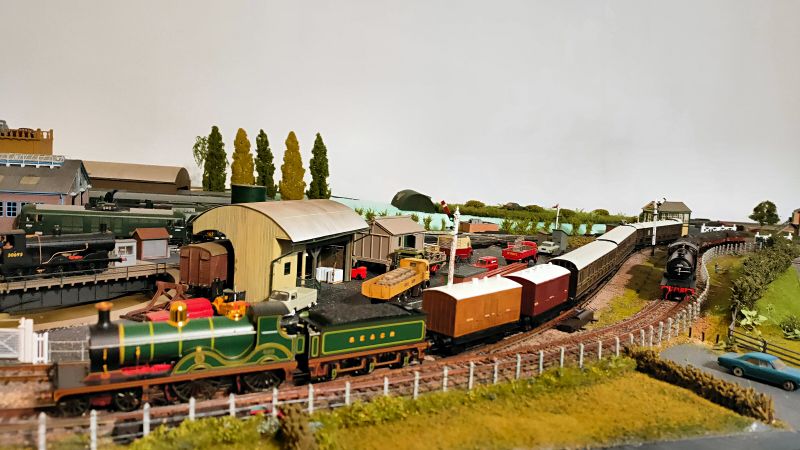
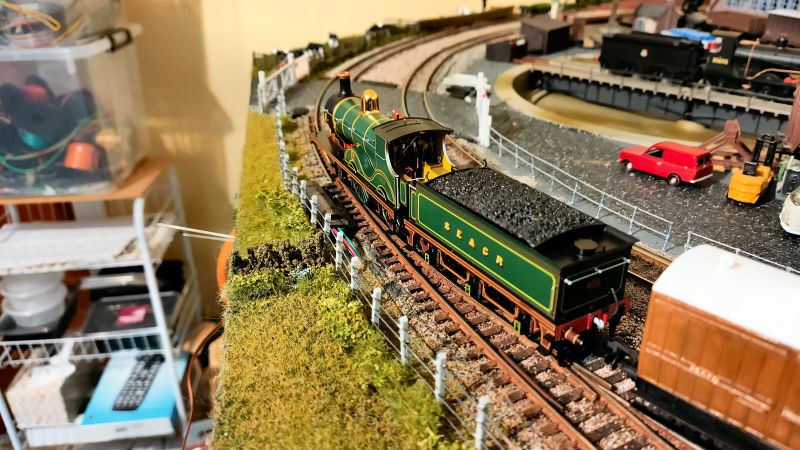
More appropriate than the B12 impulse purchase for my Southern area layout, my Rails/Dapol SECR D class 4-4-0 arrived today, pre-ordered some considerable time ago. After a quick test on DC, I fitted a Dapol Imperium Next 18 decoder and put it on a lightweight train of period stock. It runs quite smoothly, but hesitated a couple of times on points. I think the traction tyres are interfering a bit with the automatic polarity detection and switching. I will be swapping the traction tyred wheel set out later as I don't have a huge amount of suitable passenger stock and what is there is light and free rolling (my entire stock is in the photos, although I will be acquiring some of the Hatton's four and six wheel coaches in due course). There is a set of wheels without traction tyres in the box, complete with a tool to undo the crank pins.This locomotive, with its open cab, is crying out for a decent period crew. There is a firebox glow with a gentle flicker as well, activated on F0.
There have been online comments on these locomotives showing a slight discrepancy in the heights of the valances/running boards where they should line up. Looking at my photos, mine doesn't seem to have this problem, but I will check it on level track later. The fix is apparently quite easy, involving a small spacer over the tender body fixing screws.
 Last edit: by SRman
Jeff Lynn,
Amateur layabout, Professional Lurker, Thread hijacker extraordinaire
Amateur layabout, Professional Lurker, Thread hijacker extraordinaire


Posted
Full Member
Cheers Pete.
Posted
Full Member
I baulked at the additional cost of sound, but if I change my mind later, the conversion is easy enough with this loco.Very nice Jeff. I want one of those, but I must admit I blanched at the 200 quid, plus a Zimo sound decoder and file.
Jeff Lynn,
Amateur layabout, Professional Lurker, Thread hijacker extraordinaire
Amateur layabout, Professional Lurker, Thread hijacker extraordinaire
Posted
Full Member
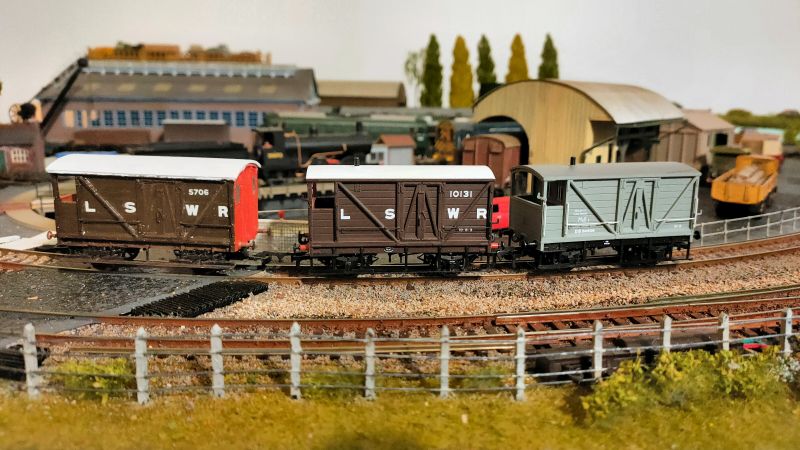
For comparison, I have included my Smallbrook Studio resin D.1541 brake van, bought before the Kernow models were announced, but started after that, and still not quite finished, awaiting the weight inscription on each side and the roof gutters and stove pipe chimney, plus lamp irons to be added. The Kernow model is much crisper, but the Smallbrook one is still pretty good, I think, and I can say I put it together.

Jeff Lynn,
Amateur layabout, Professional Lurker, Thread hijacker extraordinaire
Amateur layabout, Professional Lurker, Thread hijacker extraordinaire
Posted
Full Member
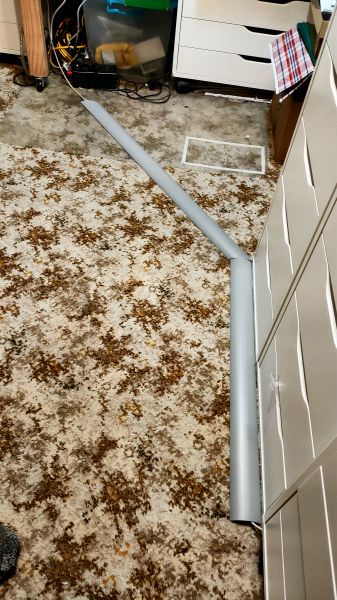
A minor improvement to the train room as a whole was to put some plastic cable ducting to replace the duct tape previously used to carry the serial cable from the NCE Power Pro command station to the old computer in the room. This followed on from tidying up some trailing cables in other parts of the house using plastic wall ducting. For the future, I will also be able to run the USB cable from the Power Cab used on the programming track as well.
Jeff Lynn,
Amateur layabout, Professional Lurker, Thread hijacker extraordinaire
Amateur layabout, Professional Lurker, Thread hijacker extraordinaire
Posted
Full Member
Cheers Pete.
Posted
Full Member
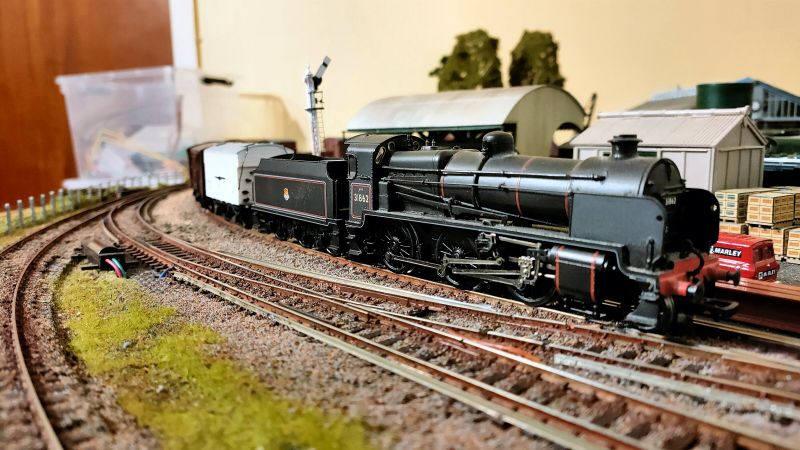
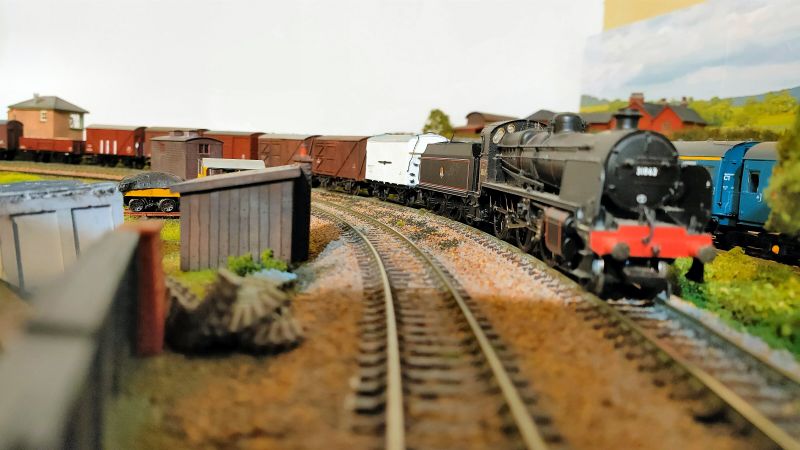
The N class was the first of Bachmann's then new super-detail 'Blue Riband' range with "proper" chassis and pickup arrangements (not split chassis as Hatton's insist on putting in their descriptions of pre-owned examples). Only the most recent ones have DCC sockets, but these earlier ones are easy enough to convert with hard-wired decoders.That's certainly a nice looking loco. I've got this hankering to go Southern Railways and joined Monty's facebook group where they do buy and sell here in Australia. I just have to pluck up courage to sell some of my loco's so that I can start getting some Southern stock.
They aren't quite up to the latest standards, but they are still very nice locos and decent runners. The real locos were able to run over just about everywhere on the Southern Railway, and were to be found from the Eastern section of the Southern Region right across to Devon and Cornwall on what became the Western Region. They were also versatile and were true mixed traffic locos.
In my opinion, they are also one of the more attractive small to medium sized locomotives.
:cheers
Last edit: by SRman
Jeff Lynn,
Amateur layabout, Professional Lurker, Thread hijacker extraordinaire
Amateur layabout, Professional Lurker, Thread hijacker extraordinaire
Posted
Full Member
Cheers Pete.
Posted
Full Member
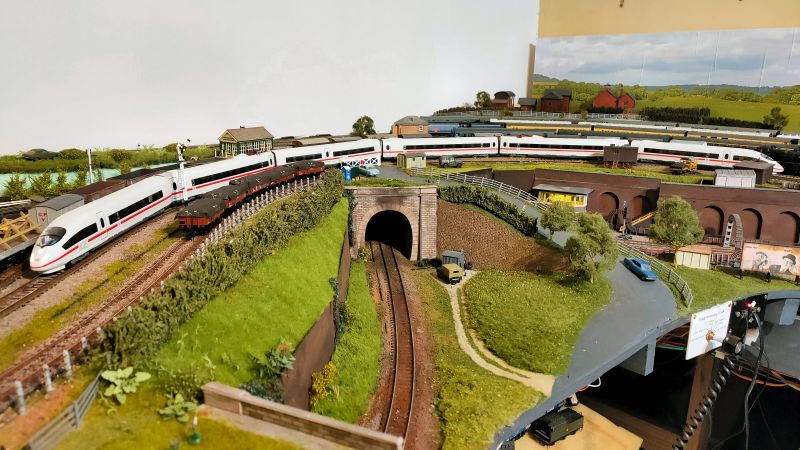
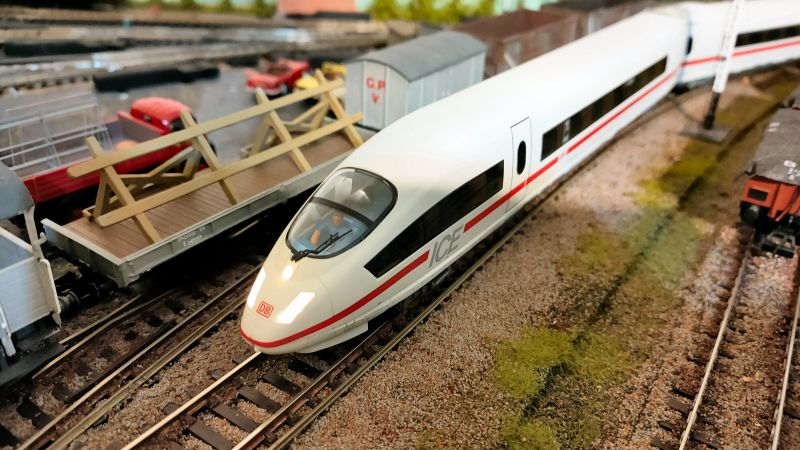
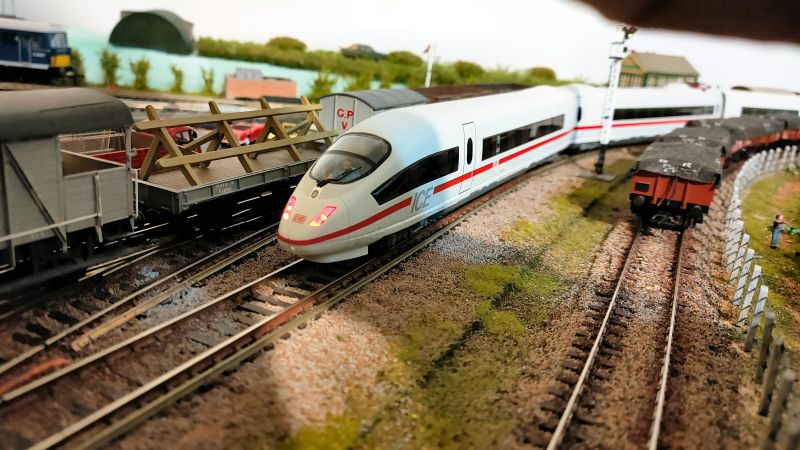
Investigation showed that the unit has electrically active 4-pin couplings, and that only one of the driving cars has track pickups on its bogies. Coupling that driving car to the Restaurant Car produced a result. It was silky smooth and quiet right from the very start on DC, so I set about fitting an 8-pin Lenz Standard+ v.2 decoder. Body removal involved removing two screws (except that one of mine was missing - no big deal because the body clips very firmly back in place). Pin 1 is marked clearly on the PCB, so it was a case of removing the blanking plug, inserting the decoder plug and tidying the wires; there is even a space provided for the decoder to sit out of the way, on top of the housing.
A quick test on the programming track with the driving car and Restaurant Car together again proved the installation was fine, and after a bit of programming to set the address and alter the acceleration and deceleration to match my usual standards, the pair of coaches were placed on the main lines and given a very quick test run, before assembling the whole train.
I have to say that for such a cheap set, the quality is very good. I am sure there are a few details missing to suit the budget price (there are some add-on roof vents to fit), but these trains are so streamlined and smooth anyway, anything missing isn't really noticeable. The lighting consists only of directional head and tail lights, but a nice extra feature is the driver figure in one end cab.
While purchasing the unit, I had decided that it needed a couple more coaches, so ordered a 1st class pantograph coach and 2nd class sitting coach to extend it to six cars, which looks better balanced, to me. The train cruised around Newton Broadway beautifully at low and medium speeds, although I have not tried its top speed yet - there seems to be plenty in reserve.
Last edit: by SRman
Jeff Lynn,
Amateur layabout, Professional Lurker, Thread hijacker extraordinaire
Amateur layabout, Professional Lurker, Thread hijacker extraordinaire
Posted
Full Member
[yt]0U29OumcX3o[/yt]
[yt]_Gnk7gnlyr0[/yt]
Jeff Lynn,
Amateur layabout, Professional Lurker, Thread hijacker extraordinaire
Amateur layabout, Professional Lurker, Thread hijacker extraordinaire
Posted
Full Member
'Petermac
Posted
Full Member
'Petermac
Posted
Full Member
I formed the train as per the preferred practise of the real ones, with fitted* wagons towards the engine, and unfitted** behind those. On main lines this was practical, but not always on branch lines where limited shunting facilities might dictate a truly mixed formation.I forgot to ask Jeff - looking at your mixed train behind the N2 - was there a special order for making up goods trains - I note you had the 16 ton minerals at the rear and wondered if that was BR practice or just the way you'd coupled them. I'd guess meat and fish vans would be towards the front to avoid any risk of contamination from the rest of the goods being hauled. :hmm
British Railways pained fitted wagons bauxite - a lighter shade in the 1950s, a darker, redder shade from around 1963. Unfitted wagons were grey, again with the shade of grey changing after a certain date. Of course, being unloved goods wagons, they weathered and faded at different rates so I have tried to reflect the multitude of colours that were apparent in the real trains.
* Fitted referred to the wagons having brakes remotely operated from the locomotive, usually vacuum operated, but later on, air brakes became the norm. This category also included wagons without remote braking but with a through pipe to allow wagons behind them to have their brakes operated. The proportion of fitted wagons in a train determined the maximum permitted speed of the train.
** Unfitted referred to wagons which had manual braking only (handbrakes). A train of unfitted wagons would have to rely on the locomotive and brake van brakes only on the move, and would have to be stopped before any downhill gradient to have the brakes on each wagon in turn manually applied by the guard and fireman/second man.
Jeff Lynn,
Amateur layabout, Professional Lurker, Thread hijacker extraordinaire
Amateur layabout, Professional Lurker, Thread hijacker extraordinaire
Posted
Full Member
Yes, the usual close-coupling arrangement where the couplings move outwards on curves and close up on straight sections.Lovely looking trains those ICE units Jeff, both in real life and in model form. Nice close coupling too - how do they do that - a swinging drawbar ?
Jeff Lynn,
Amateur layabout, Professional Lurker, Thread hijacker extraordinaire
Amateur layabout, Professional Lurker, Thread hijacker extraordinaire
Posted

Full Member
Interesting read! With no use of brake vans in Denmark, wagons without air brakes had to be evenly distributed throughout the train, and the last wagon had to be fitted with a working air brake.[user=6]Petermac[/user] wrote:I formed the train as per the preferred practise of the real ones, with fitted* wagons towards the engine, and unfitted** behind those. On main lines this was practical, but not always on branch lines where limited shunting facilities might dictate a truly mixed formation.I forgot to ask Jeff - looking at your mixed train behind the N2 - was there a special order for making up goods trains - I note you had the 16 ton minerals at the rear and wondered if that was BR practice or just the way you'd coupled them. I'd guess meat and fish vans would be towards the front to avoid any risk of contamination from the rest of the goods being hauled. :hmm
British Railways pained fitted wagons bauxite - a lighter shade in the 1950s, a darker, redder shade from around 1963. Unfitted wagons were grey, again with the shade of grey changing after a certain date. Of course, being unloved goods wagons, they weathered and faded at different rates so I have tried to reflect the multitude of colours that were apparent in the real trains.
* Fitted referred to the wagons having brakes remotely operated from the locomotive, usually vacuum operated, but later on, air brakes became the norm. This category also included wagons without remote braking but with a through pipe to allow wagons behind them to have their brakes operated. The proportion of fitted wagons in a train determined the maximum permitted speed of the train.
** Unfitted referred to wagons which had manual braking only (handbrakes). A train of unfitted wagons would have to rely on the locomotive and brake van brakes only on the move, and would have to be stopped before any downhill gradient to have the brakes on each wagon in turn manually applied by the guard and fireman/second man.
Cheers,
Claus
www.flickr.com/photos/ellef/
Claus
www.flickr.com/photos/ellef/
Posted
Full Member
That's interesting too, as I know very little about Danish freight operations. Does that mean that the non braked wagons were through-piped, Claus?Interesting read! With no use of brake vans in Denmark, wagons without air brakes had to be evenly distributed throughout the train, and the last wagon had to be fitted with a working air brake.
Jeff Lynn,
Amateur layabout, Professional Lurker, Thread hijacker extraordinaire
Amateur layabout, Professional Lurker, Thread hijacker extraordinaire
Posted
Full Member
In the later days, yes. Before wagons with pipes (and brakes) you would have had a few wagons with a small compartment (often raised above roof level) with a brake wheel and a small seat for a brake man. In the very early days the brake man would just have seat on the roof![user=2172]Claus Ellef[/user] wrote:That's interesting too, as I know very little about Danish freight operations. Does that mean that the non braked wagons were through-piped, Claus?Interesting read! With no use of brake vans in Denmark, wagons without air brakes had to be evenly distributed throughout the train, and the last wagon had to be fitted with a working air brake.
Cheers,
Claus
www.flickr.com/photos/ellef/
Claus
www.flickr.com/photos/ellef/
Posted
Full Member
Sounds a bit like the Wild West![user=321]SRman[/user] wrote:In the later days, yes. Before wagons with pipes (and brakes) you would have had a few wagons with a small compartment (often raised above roof level) with a brake wheel and a small seat for a brake man. In the very early days the brake man would just have seat on the roof![user=2172]Claus Ellef[/user] wrote:That's interesting too, as I know very little about Danish freight operations. Does that mean that the non braked wagons were through-piped, Claus?Interesting read! With no use of brake vans in Denmark, wagons without air brakes had to be evenly distributed throughout the train, and the last wagon had to be fitted with a working air brake.

Jeff Lynn,
Amateur layabout, Professional Lurker, Thread hijacker extraordinaire
Amateur layabout, Professional Lurker, Thread hijacker extraordinaire
Posted
Full Member
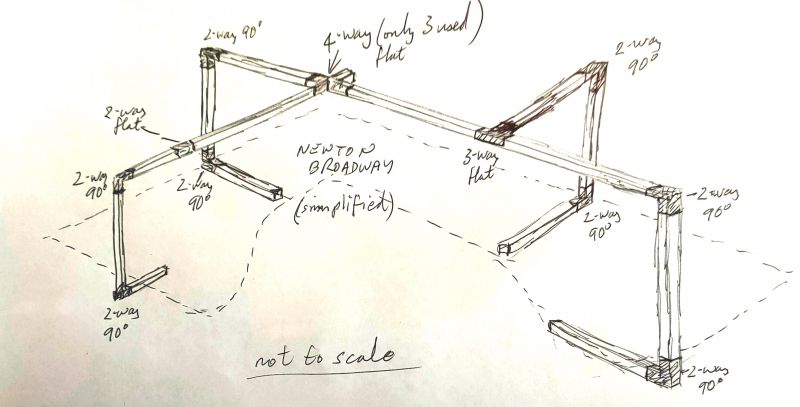
Several of the pre-cut lengths weren't in stock, so I have to cut some of the longer lengths instead, so two 1.2m lengths supply the four 0.6m lengths I want for the under-board mountings. two 1.8m lengths supply the four 0.9m verticals I need, although one or two of those may need to be trimmed further by about 25mm to allow for crossing the baseboard longitudinal frames. Being aluminium, it cuts very easily with a hacksaw.
Once it is all in place and nice and stable, I will be sticking long flexible strips of LED lighting at 12V DC.
Hopefully, this will improve my photography of the layout by reducing incidences of my own shadow getting in the way.
Anyway, here's the sketch of it, not to scale. The rough outline of the train boards is dotted in. The 4-way connector allows me to add extra support if I find it necessary.
Jeff Lynn,
Amateur layabout, Professional Lurker, Thread hijacker extraordinaire
Amateur layabout, Professional Lurker, Thread hijacker extraordinaire
Posted
Full Member
I think Max (Maxinsouthoz) used it as his baseboard supports and when I suggested he had more money than sense, he pointed out that it was quite reasonably priced.
Here, it should carry a warning or at best, only payable by "proper cash money" !!
Lovely stuff - strong, light and easy to work with but my oh my, it's expensive …………………. :shock:
Does it come in just the one cross section or are there thick tubes and thin tubes ? Just thinking, you'd need heftier stuff for the baseboard than for a lighting rig …………… :hmm
'Petermac
1 guest and 0 members have just viewed this.