
Wayne's South Shore Baseboards
Posted
#28543
(In Topic #1979)

Full Member
I am wanting to build the baseboards with 1 x 3 pine for the structure, (legs and braces), and probably 5/8" plywood as the baseboard top. I then want to cover the plywood with 2" of styrofoam (blue - 2 pound density). This will give me a great depth to work below the lowest point of the track.
Now here is the question, as stiff as this styrofoam is, why do I need the 5/8" plywood? I should also add here the fact that I will be having a shelf under the layout for storage of everything imaginable. The layout height will be around 38" to 40" as measured from the top of the 1 x 3 pine structure. So the plywood shelf, (probably 1/2" plywood) will be about 14" above the floor.
My thinking is that the 1/2" plywood shelf will provide the stability to keep the baseboard square and stiff, of course the 2" styrofoam will be glued to the tops of the 1 x 3 pine structure for added stability.
I know I have not given you all the details here, so if more info is needed just ask.
Wayne


Posted
Guest user
which seriously affects running obviously,so it does not matter what you use
as long as it is totally stable in most conditions plus styrofoam on its own will
not take much pressure ie-leaning on it etc.
:hmm;-):lol::lol::cool:
Posted
Guest user
The more study the base can be the better, because further down the line ( pun not ment ) the safer it will be for you, as you will not want the board to warp and start to cause you problems with your track, when you have laid it all and ballasted and even added the scenics, this would all add major headaches.
So the number one rule, is you can is have the thickest baseboard you can, the covering is up to you, we use cork tiles, which give a very flat surface on which to start work.
Posted

Full Member
Apart from the stability problems (re warping - winding you may call it !), there may well be other future problems.
The things that spring to mind are: Styrofoam won't take screws or pins / nails. Screws will probably be needed for underbas point motors and signalling. From experience, any hole made in Styrofoam will, over time, become bigger !!! Holes for wires etc would be 1 example.
Glueing to styrofoam could be problematic - it doesn't take kindly to solvent glues (or their modern substitutes) and, believe it or not, it won't be much quieter than ply - in fact, it may well make more of a "drumming" sound than timber.
My advice - stick to your ply tops - your framing would be strong enough.
'Petermac
Posted
Full Member
I wasn't thinking about warping, so thank you all for bringing that to my attention. The plywood top will remain in place.
Wayne
Posted

Full Member
Baseboard construction time…. hooray :doublethumb
Remember to think about getting the layout out through a door if you ever have to dismantle it for a house move or exhibition.
Height adjusters on each of the legs is a good move too.
cheers
Posted
Guest user
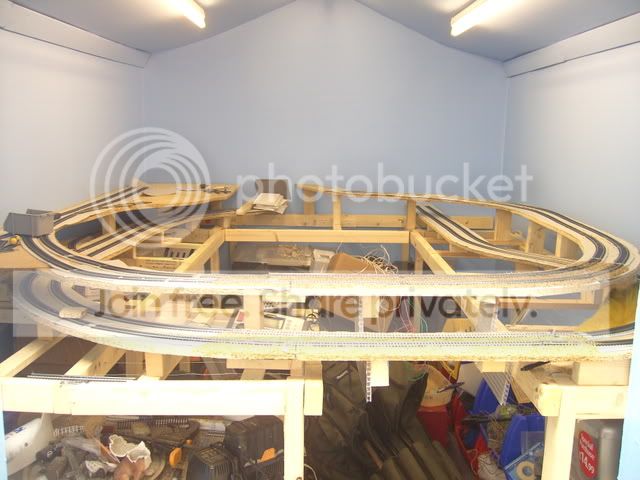
have you thought about a raised track bed, i have used this method and i find it a lot better than the flat table top. all my main line is done this way and it is so simple to add droppers, points etc as you don't have to clamber about under the base board. i have just built a depot that fits into the back right, i built this as a module then slotted it in and joined the track and wires. this will also give you the chance to add scenery above and below the track.
Posted
Full Member
Wayne, Height adjusters on each of the legs is a good move too.
Do you have any idea how many legs I'm going to have? I have not counted them only because I don't want to know! :chicken
The height adjusters are needed because…….Uneven floor?…….poor craftsmanship in the baseboard frames?……..Any other reasons?
My floor is basically flat and pretty even throughout, I have cleaned it with lots of water and I don't recall any puddles afterwards.
The craftsmanship, well I'm fairly good at woodworking, so if I make that kind of mistake the shame on me. I'll just have to fix it!
So if there are reasons I'm not thinking of, please let me know, otherwise I'd just as soon save the money and time needed to do it. But, if there are reasons that would make me change my mind, well, you've seen on here (very recently) that I can change my mind in a blink. :thud
Matt,
The raised track bed is great for what you are doing, and does look super, but it just doesn't seem to be the design that I am looking for, which is more rural looking, and less urban.
Wayne
Posted

Legacy Member
Posted
Full Member
'Petermac
Posted
Full Member
Unfortunately I cannot attach to the walls, everything will be self standing. Just will have to brace very well.
Petermac,
I know, measure twice, cut once!

Wayne:cool wink
Posted
Guest user
:doublethumb:thumbs:thumbs:lol::lol::lol::cool:
Posted
Guest user
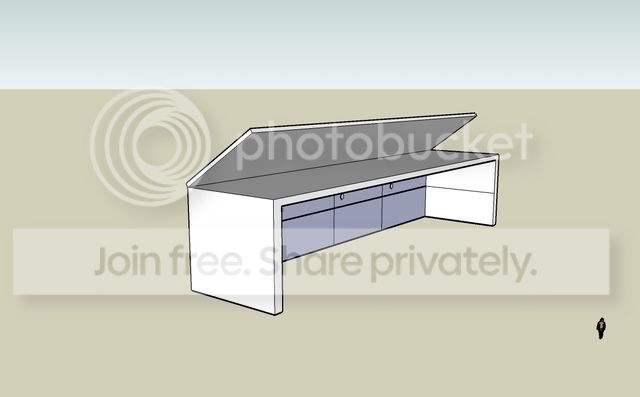
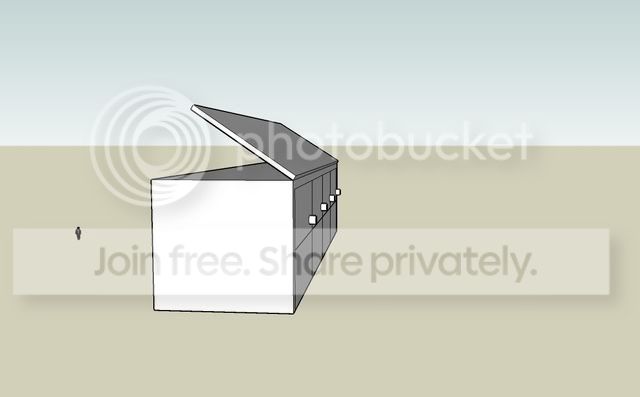
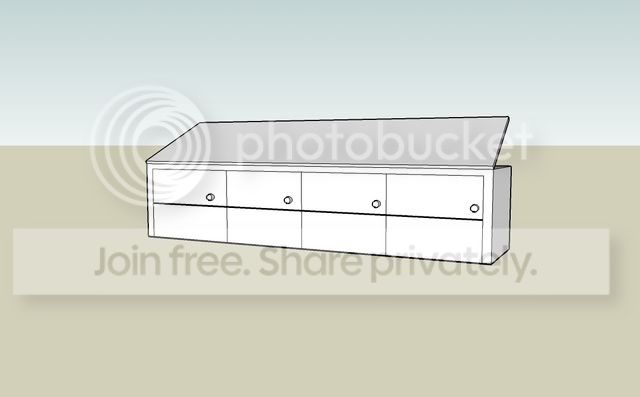
But an easy way to do this is by using sheet materials at the ends and along part of the sides from the floor to underneath the baseboard
As an example a flat packed piece of chipboard furniture becomes very solid when screwed together with a few screws at that rigidity is purely through the use of sheet materials
You can design it so you create storage shelves aswell while doing it this way.
cheers BrianW
Posted
Full Member
It really comes down to just how complicated I am willing to make it. We all know that cost always come into play sooner or later, and that is always in the back of my mind. I really need the storage, but I also must have access to the underneath area of the baseboard for wiring and who knows what else. So the more I box it in, the harder it gets to work underneath it.
This past summer while helping my Dad expand his layout and to wire his existing layout, I found out how difficult it is to get underneath and work on the wiring. He had no shelving, so I was setting on the floor working over my head. twenty five years ago that would not have bothered me, but now, it just plain hurts to do that! :twisted:
Well I seem to have poured out my problems didn't I!
Wayne
(Lots To Ponder) :hmm
Posted
Legacy Member
Posted

Inactive Member

Ken.
'It don't mean a thing if it ain't got that Swing'
Posted
Guest user
Posted
Guest user
Posted
Guest user
cheers Brian.W
Posted
Legacy Member
1 guest and 0 members have just viewed this.